
How Do Porta Potties Work?
The setup is simple. A standard unit sits about 44 by 48 inches on the ground and stands roughly 92 inches tall, so it fits tight jobsite corners without eating space you need for material staging. Inside, waste drops into the holding tank below the seat. That tank holds a blue chemical solution that controls odor and starts breaking solids down, the same portable toilet chemicals a service truck restocks on every visit. There is no flush, no water tank, no motor. When a construction worker walks up to a porta potty on a Delano jobsite, they use it exactly like a standard toilet, and the unit resets itself for the next person. ANSI/PSAI Z4.3, the industry service standard, sets a baseline of one service visit per week for up to 10 users over a 40 hour week, which is why route trucks pump, rinse and restock on a set schedule rather than waiting for a complaint. For sizing a crew correctly, OSHA 1926.51(c) sets the ratio: one toilet for 20 workers or fewer, then one toilet seat and one urinal per 40 workers once you pass 20. If you are staffing a bigger crew, the porta potty rental count matters more than the model you pick. Curious what a standard unit actually looks like laid out? Our standard porta potty rental page breaks down the diagram.
How Do Flushable Porta Potties Work?
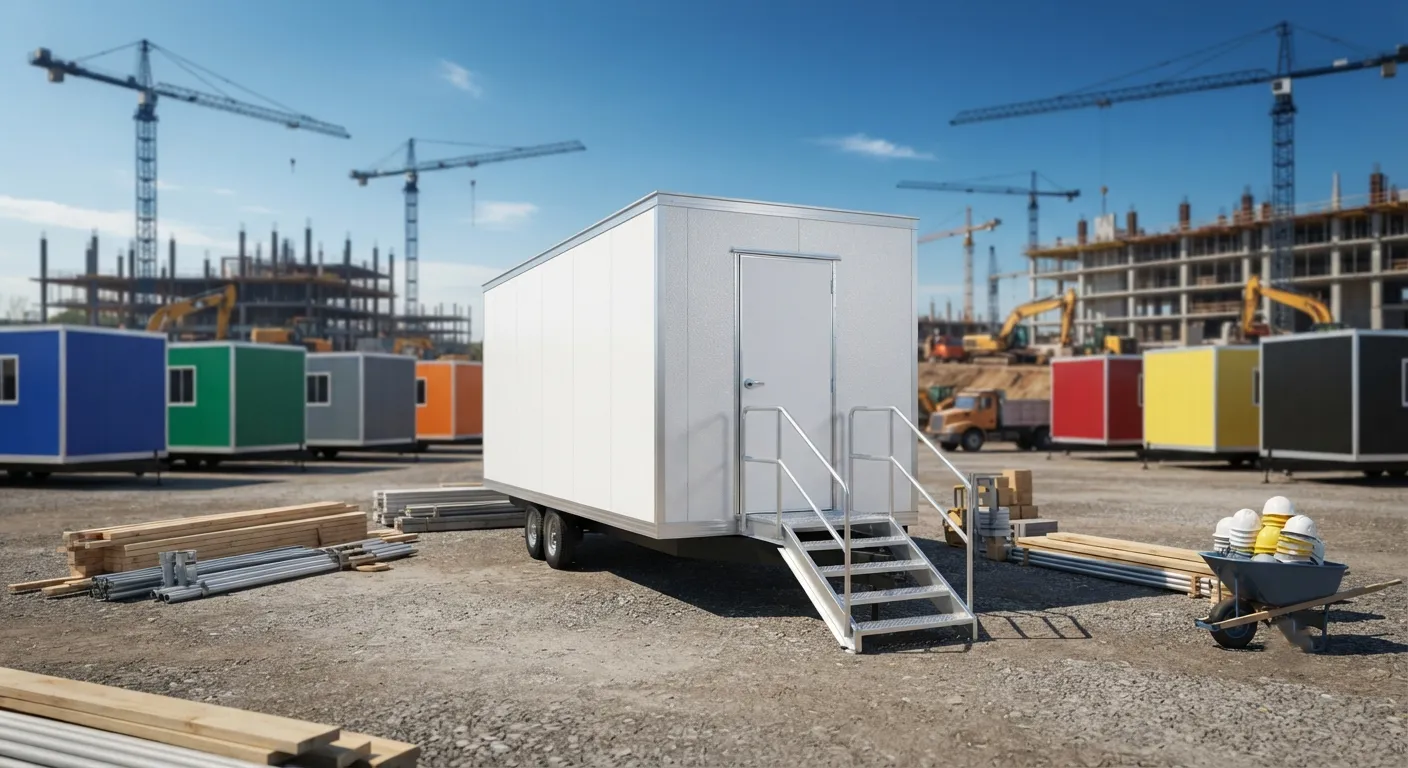
A deluxe flushable unit adds a small fresh-water reservoir and a foot pump or hand lever that pushes a rinse of water into the bowl after use, dropping waste into the same sealed holding tank as a standard unit. It feels closer to a bathroom at home, which is why event planners in Delano lean toward the deluxe flushable porta potty for weddings and corporate gatherings instead of the basic model. The tank still needs pumping on the same service interval, so the water flush does not change how often the truck comes. It changes comfort, not mechanics. For anything larger than a handful of flushable units, a restroom trailer rental usually makes more sense, since trailers run multiple stalls off one larger system instead of several individual tanks. If your event needs accessible seating too, ADA Standards section 213.2 requires that at least 5 percent of a cluster of single-user units be accessible, with a minimum of one, and our ADA accessible porta potty meets that with a 60 inch turning circle per ADA 304.3.1 and a 32 inch clear door opening per ADA 404.2.3.
How Does a Portable Sink Work?
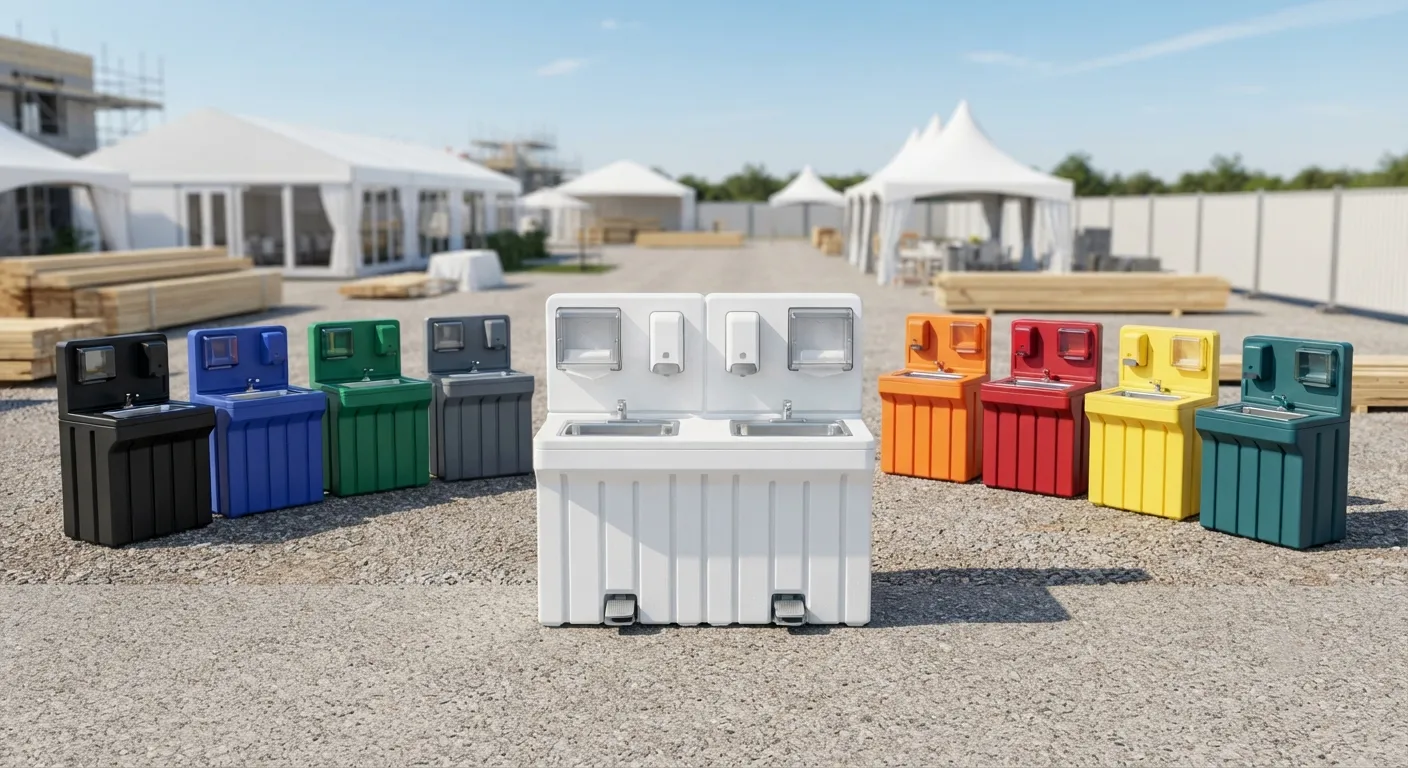
A portable sink runs on the same no-plumbing logic as a porta potty: a fresh water tank feeds a pump, either foot-operated or battery-powered, and gray water drains into a separate tank underneath instead of a sewer line. Soap comes standard, because 29 CFR 1910.141(d)(2) requires soap and a towel or hand-drying device at any washing station, and hand sanitizer alone does not satisfy that rule. That is a big reason job sites pair toilets with a handwashing station rental rather than relying on sanitizer stands alone. Farms around Delano with hand-labor crews fall under a different standard: OSHA 1928.110 requires potable water, toilets and handwashing within a quarter mile walk, at one facility per 20 employees, which is worth checking against our farm and agricultural restrooms page if you run seasonal labor. If your crew is doing paint, coating, or pesticide work, OSHA 1926.51(f)(1) kicks in specifically for washing after paints, coatings, herbicides or insecticides, and a portable sink rental placed near that work zone covers the requirement.

Do Porta Potties Need a Septic Tank Connection?
No. That is the whole point of a porta potty. It is a closed system, unlike a home septic tank, which is typically pumped every 3 to 5 years depending on tank size and household use. A porta potty tank gets pumped on a service route instead, and Delano Porta Pros handles that on the same truck run that restocks chemicals and toilet paper. If you are comparing the two systems for a property near Jovista, 6.4 miles northeast of Delano, or out past McFarland, 8.5 miles south, our septic pumping service page covers tank pumping separately from portable unit service, since they are different equipment entirely. Grease interceptors follow their own rule too: they get pumped once fats, oils, grease and solids reach 25 percent of the liquid depth, covered on our grease trap pumping page. For camping trips out toward Rodriguez Camp, 10.4 miles northeast, a camping porta potty works the same sealed-tank way, just scaled down and easier to move.
How often do porta potties get serviced?
Standard service runs weekly, per the ANSI/PSAI Z4.3 baseline of one visit per week for up to 10 users over a 40 hour week. High-traffic events or larger crews often need more frequent visits. See how many porta potties do I need to size your count against your schedule.
Do porta potties smell?
They shouldn't, if serviced on schedule. The vent stack and chemical treatment control odor between visits, and Delano Porta Pros restocks that treatment on every stop. Our do porta potties smell page covers what causes odor when service slips.
How much does renting a porta potty cost in Delano?
A standard unit typically runs 100 to 350 dollars a day, with weekly and monthly rates dropping the per-day cost. Full pricing sits on our porta potty rental cost page, broken out by duration.
Can a porta potty be placed anywhere on my property?
Placement in the public right of way needs confirming with the city of Delano before you set a unit there. On private property, our porta potty placement guide covers clearance and ground stability, including ADA 302.1's requirement for a stable, firm, slip-resistant surface.
What is the difference between a porta potty and a restroom trailer?
A porta potty is a single sealed unit with no water line. A restroom trailer runs multiple stalls, often with running water and lighting, off one connected system. Compare options on our portable restroom rental page before booking.
Next step
Get a delivery date
Tell us the address, the dates and the headcount. We size the order and confirm the route.